

The Limitation of Vibrotactile Systems
Vibrotactile approaches are inherently limited:
They simulate sensation, not forceThey do not reproduce pressure gradientsThey cannot model resistance or mechanical constraints.
They do not replicate detents or snap-action behaviorIn training environments such as aviation and maintenance, these limitations reduce procedural realism and can impact skill transfer.

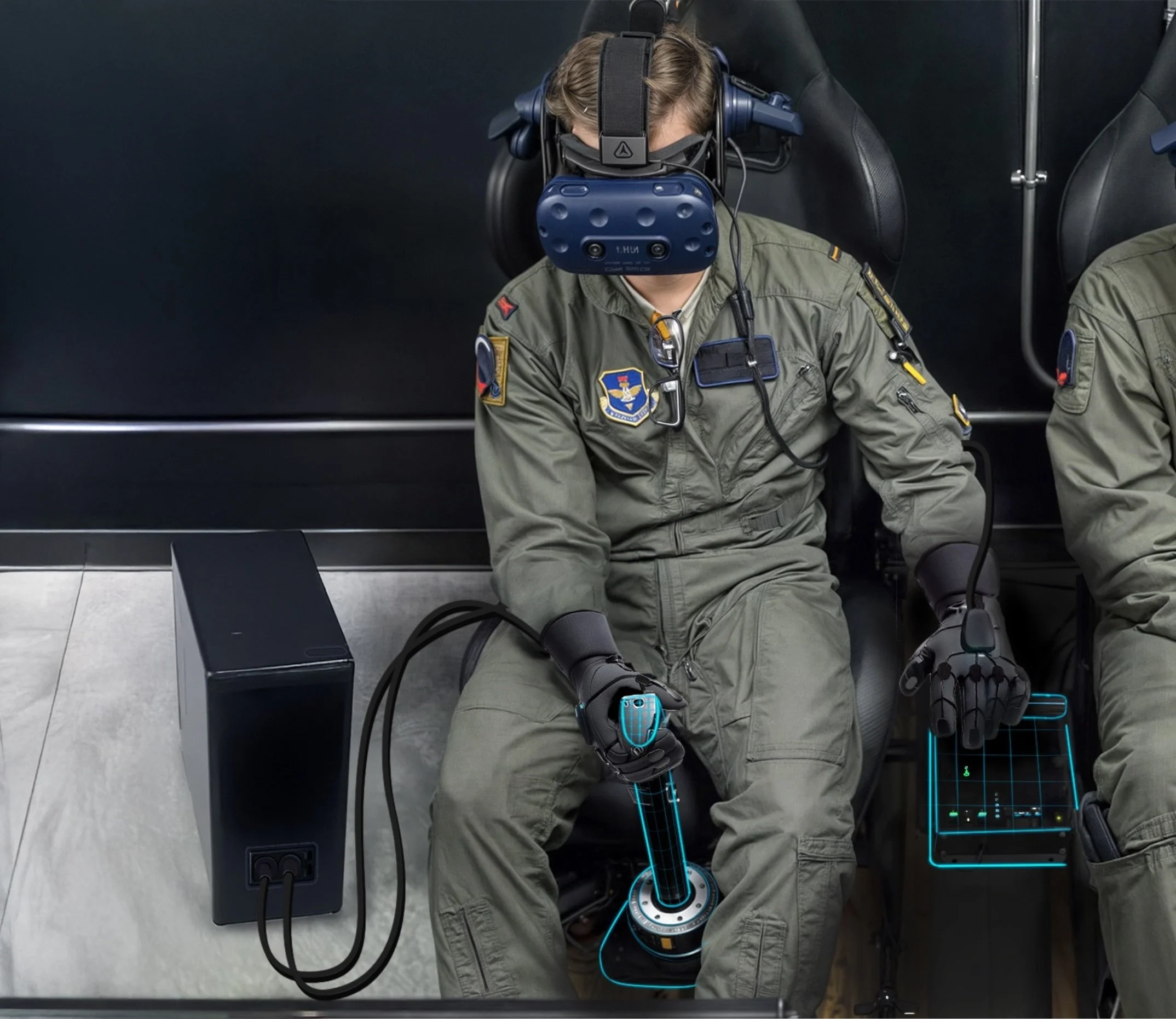
Pressure-Based Interaction –
HRi’s approach is based on controlled application of pressure rather than vibration.
This enables:
Localized force interaction at points of contact
Simulation of mechanical resistance
Representation of detents and switch behavior
Directional tactile feedback at the fingertip
The result is a more accurate representation of how users physically interact with real-world controls and components.
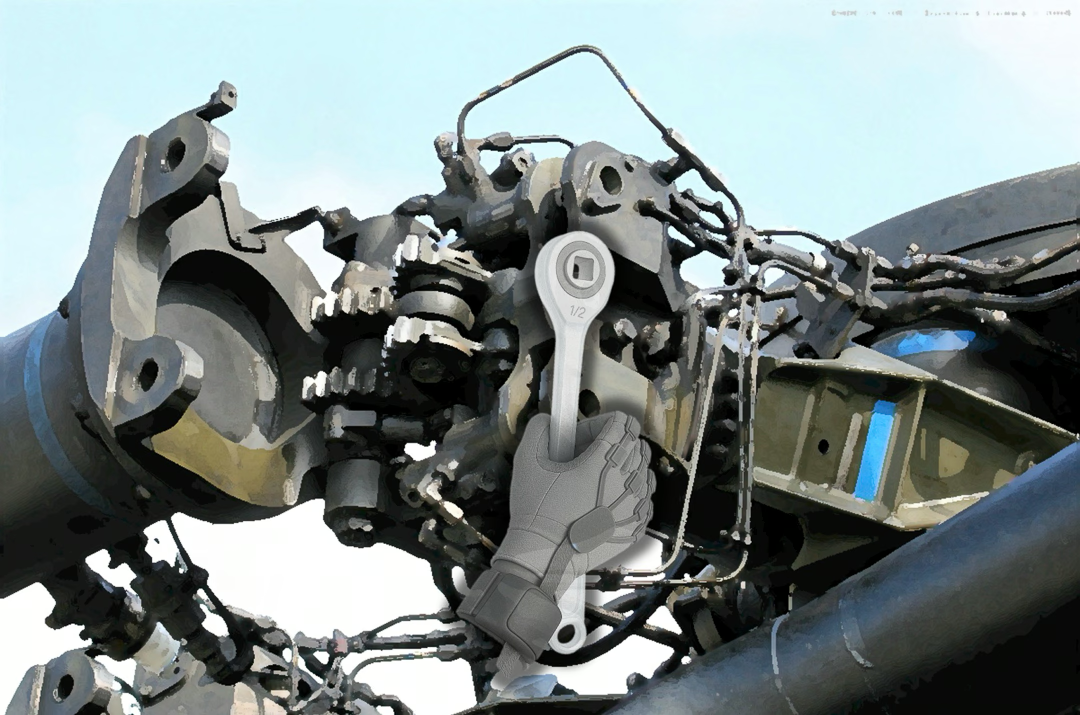
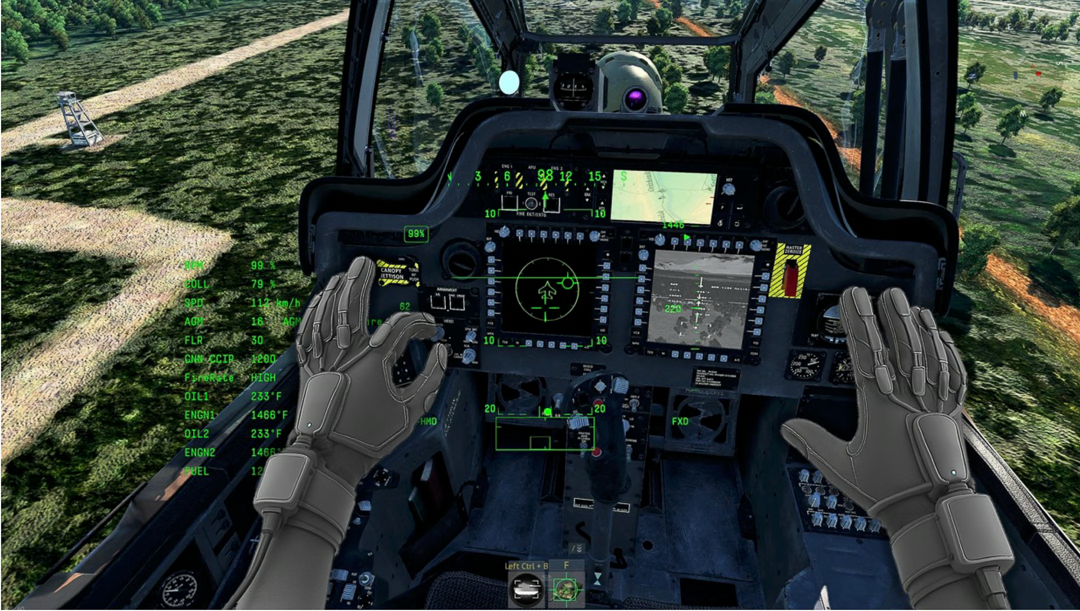
System Architecture -
The HRi system integrates:
Distributed tactile contact across the handHigh-resolution fingertip interaction
Embedded control systems for actuator coordination
Software integration with XR simulation environments
The architecture is designed for: Low-latency response
Repeatable interaction behaviorIntegration with existing simulation platforms.
Designed for Simulation, Not Gaming –
This system is engineered specifically for professional training use cases.
Key considerations include:Consistent interaction across repeated training sessions
Compatibility with procedural training environments
Ability to support structured simulation scenarios
Integration into distributed training systems
This is not a consumer haptics device — it is a component of training infrastructure.
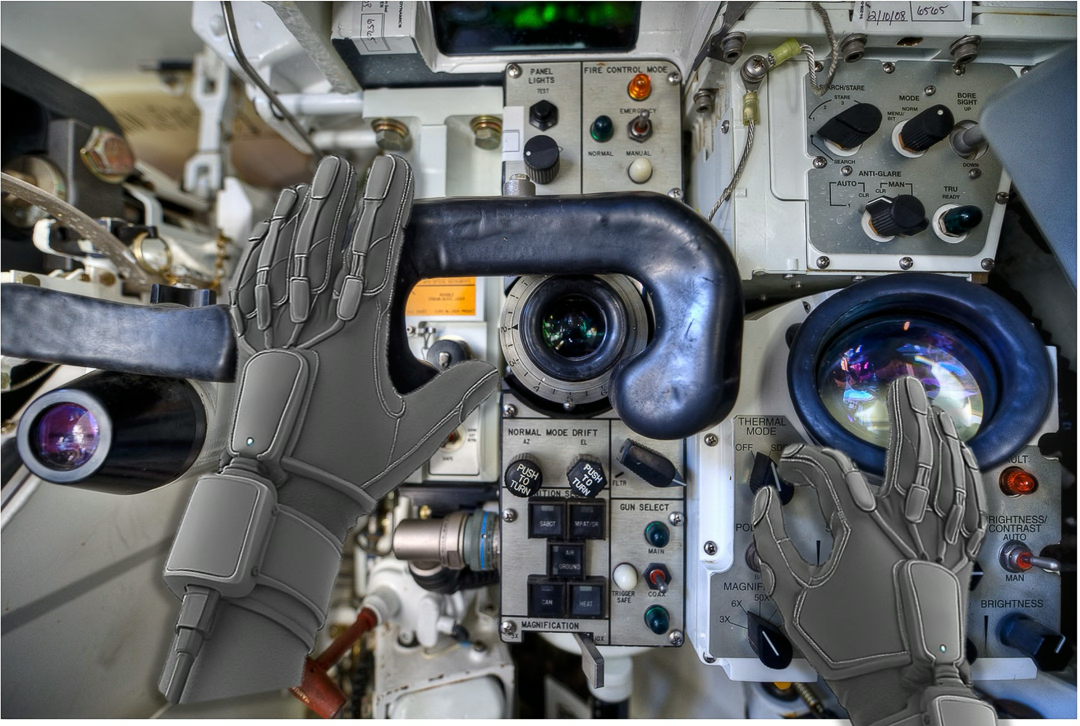
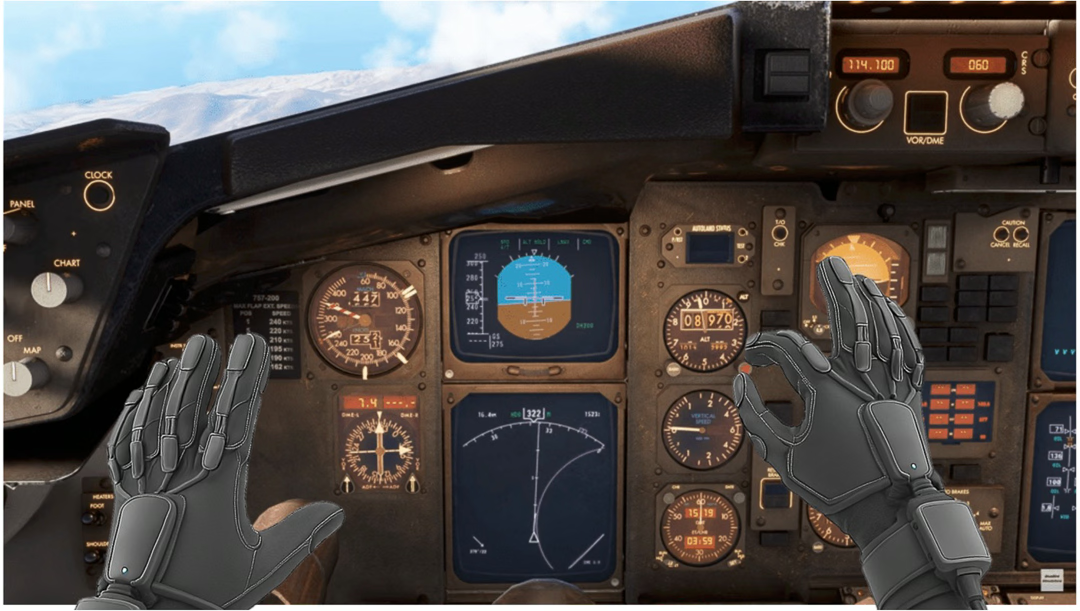
Integration Approach –
The HRi architecture is designed to interface with modern simulation environments through a flexible integration layer.
This allows: Use within existing XR-based training systems.
Alignment with simulation software workflows
Potential integration into broader training architecture
The goal is to enable tactile capability without requiring a complete redesign of simulation environments.
Development Approach –
HRi is focused on iterative engineering and validation:
Controlled prototype developmentMeasured evaluation of interaction fidelity
Progressive refinement of mechanical and control systemsIntegration testing within representative simulation scenarios
This approach is aligned with achieving a demonstrator milestone at I/ITSEC 2026.