

INVESTOR / STRATEGIC POSITIONING
From Simulation to Interaction: HRi’s Role in the Next Evolution of Defense Training
The Structural Constraint in Current Systems
High-fidelity simulators deliver realism—but at significant cost:
- $10M–$40M per unit
- Limited deployment density
- Centralized access
At the same time, XR-based systems offer scalability—but lack physical interaction fidelity.
This creates a fragmented training ecosystem:
- High realism, low scalability
- High scalability, limited realism
HRi’s Position in the Stack
HRi is developing a pressure-based tactile interface layer designed to sit between these two extremes.
Rather than replacing existing systems, it enhances them.
This layer enables:
- Physical interaction within XR environments
- Realistic force and resistance feedback
- Integration into distributed training architectures
In effect, HRi is addressing a missing layer in the simulation stack.
Why This Approach Is Different
Most haptic technologies focus on sensation.
HRi focuses on interaction fidelity.
That distinction changes the value proposition.
Instead of enhancing experience, the system enhances:
- Procedural accuracy
- Skill transfer
- Training effectiveness
This aligns directly with defense priorities.
A Focused Beachhead Strategy
HRi’s initial deployment is intentionally narrow:
- Military aviation training
- Maintenance training environments
These use cases are:
- High-value
- Clearly defined
- Directly impacted by tactile realism
This focus reduces complexity while maximizing relevance.
- Scalability and System-Level ImpactBy enabling realistic interaction within distributed systems, HRi supports:
- Increased training throughput
- Reduced infrastructure dependency
- Expanded access to high-quality training
Designed for Integration, Not Disruption
HRi’s architecture is built to integrate with:
- Existing XR platforms
- Simulation software environments
- Distributed training systems
This reduces adoption friction and accelerates deployment potential.
Strategic Implications
HRi is not entering the market as a standalone product company.
It is positioning itself as:
- A capability layer
- An enabling technology
- A component of training infrastructure
That positioning is critical in defense ecosystems, where integration and interoperability drive adoption.
Looking Forward
As simulation continues to evolve, the next phase will not be defined by visual improvements alone.
It will be defined by the ability to:
- Interact
- Apply force
- Execute procedures physically
HRi’s approach directly addresses this shift.
And in doing so, it is helping define what the next generation of military training systems will require—not just what they will look like.
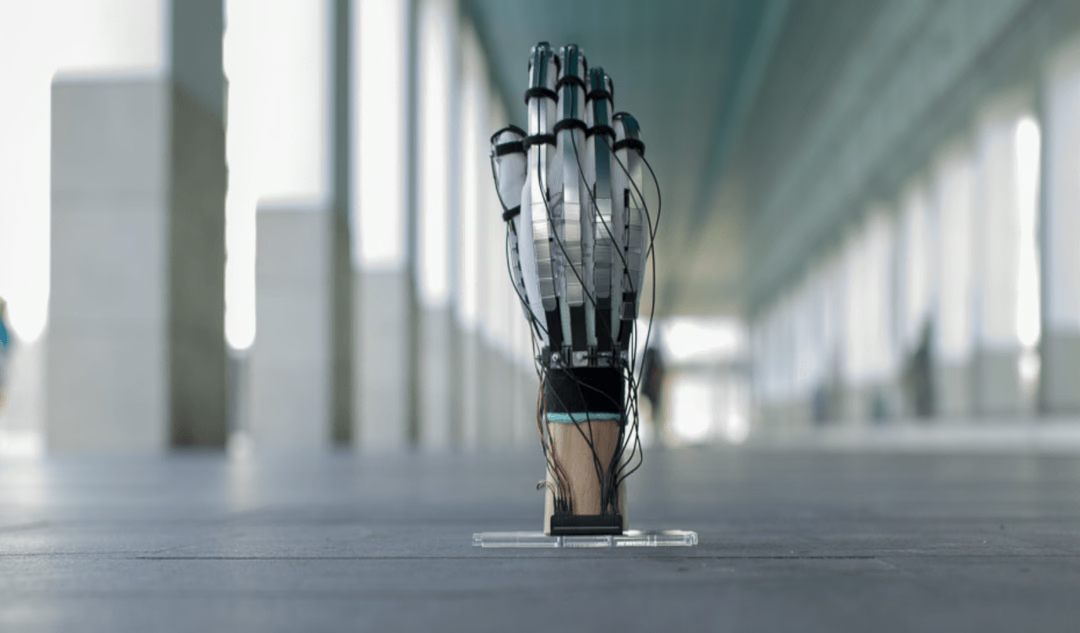
From Simulation to Interaction: HRi’s Role in the Next Evolution of Defense Training
Military training systems are undergoing a structural transition.
For years, innovation has centered on visual fidelity—improving rendering, tracking, and environmental realism. These advances have delivered immersive simulation environments that closely replicate real-world scenarios.
But a critical capability remains underdeveloped:
Physically accurate interaction.
This gap represents both a limitation—and an opportunity.